Evaluating Asters Stained Glass Digital Assets for Modern Craft Projects
For digital crafters, scrapbookers, and small business owners, selecting the right graphic assets is a balance between aesthetic appeal and technical utility. The Asters Stained Glass collection represents a specific niche within the broader category of floral digital downloads, merging the intricate visual language of traditional stained glass with the delicate structure of aster flowers. Understanding what makes this specific style distinct, and how it fits into a larger workflow involving sublimation, printable stationery, and vinyl cutting, requires a practical look at file formats, resolution, and design versatility.
Defining the Aesthetic and Technical Specifications
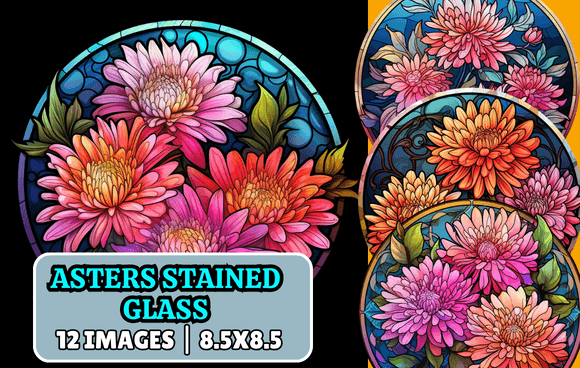
The core appeal of the Asters Stained Glass design lies in its simulation of light passing through colored panes. Unlike flat vector illustrations or watercolor washes, this style relies on bold outlines and vibrant, segmented color fields to mimic the leaded glass effect. In this specific bundle, the inclusion of 12 high-definition images provides a curated set rather than an overwhelming library, allowing users to focus on quality over quantity. The designs are rendered in PNG format, which is critical for maintaining transparency. This means the intricate "glass" patterns can be layered over different background colors or textures without a white box surrounding the image, a common frustration with lower-quality JPEGs.
Technical dimensions play a significant role in usability. With files sized at 8.5" x 8.5", these graphics are optimized for square-format applications. This dimension is particularly relevant for modern crafting trends, such as creating coasters, square greeting cards, or specific sections of planner pages. The "HD" designation suggests a resolution sufficient for printing at standard DPI (dots per inch) requirements, ensuring that the fine lines characteristic of stained glass patterns do not appear pixelated when printed on cardstock or transferred via sublimation.
Comparing Formats: PNG vs. SVG in Craft Workflows
A frequent point of evaluation for crafters is the choice between raster formats like PNG and vector formats like SVG. The Asters Stained Glass pack focuses on PNG, which offers distinct advantages for certain projects but also presents limitations compared to SVG alternatives.
- PNG Strengths: Ideal for "what you see is what you get" applications. If the goal is immediate use in digital planning apps, printing as-is for gift wrap, or using pre-colored designs for sublimation on mugs and tumblers, PNG is often superior. The color blending and texture effects inherent in a stained glass look are preserved exactly as the artist intended.
- SVG Considerations: While this specific pack highlights PNG, many crafters working with cutting machines like Cricut or Silhouette prefer SVG files for their scalability and ability to separate layers. If a user intends to cut the design out of actual adhesive vinyl or heat transfer vinyl (HTV) in multiple colors, a PNG requires manual tracing or conversion, which can sometimes lose the fine detail of the "lead" lines. Users needing multi-layer cut files might find themselves looking for an SVG companion pack or converting these PNGs, weighing the time investment against the convenience of a ready-to-print file.
Therefore, the decision to utilize this pack often depends on the end product. For full-color prints and digital composites, the PNG format is efficient. For physical die-cutting where material cost is a factor, the lack of native vector paths may require additional software steps.
Practical Applications and Material Compatibility
The versatility of the Asters Stained Glass graphics extends across various mediums, but success depends on matching the file type to the material. The "colorful design" aspect makes these images particularly effective for items where light interaction enhances the visual impact.
Sublimation and Hard Goods
One of the primary use cases identified for these assets is wrapping acrylic tumblers and decorating mugs. Sublimation printing thrives on vibrant, high-contrast images. The stained glass style, with its dark outlines and saturated colors, translates exceptionally well to polymer-coated surfaces. When applied to a clear acrylic tumbler, the semi-transparent nature of the sublimation ink combined with the stained glass motif can create a convincing illusion of actual glass panels. However, crafters must ensure the 8.5" x 8.5" dimensions align with the template of their specific tumbler size. Straight tumbler wraps often require precise measurement to avoid seams or gaps, so resizing the HD image while maintaining aspect ratio is a necessary step in the preparation phase.
Paper Crafts and Stationery
For paper-based projects, such as scrapbook decorations, invitations, and planners, the high quality of the source file is paramount. The textured look of stained glass adds depth to flat paper goods. When used for gift wrapping, these designs can serve as focal points on plain kraft paper or as part of a collage in a junk journal. Because the files are provided in a standard print-ready size, they integrate easily into common design software used for stationery. Users creating thank-you cards or event invitations can leverage the "artistic" feel of the stained glass to elevate the perceived value of the handmade item.
Digital Planning and Stickers
In the realm of digital planning, PNGs with transparent backgrounds are the industry standard. These aster designs can be dragged and dropped into apps like GoodNotes or Notability to decorate weekly spreads. Furthermore, if a user has access to a sticker printer, these graphics can be printed on waterproof sticker paper to create functional yet decorative elements for physical planners. The "sticker" potential here is high because the bold outlines of the stained glass style remain visible even when scaled down to smaller sizes, unlike detailed photographs which may become muddy.
Decision Factors: When to Choose This Style
Selecting the Asters Stained Glass bundle over other floral or artistic resources comes down to specific project goals and aesthetic preferences. It is not a one-size-fits-all solution, and understanding its tradeoffs is essential for informed purchasing.
Ideal Scenarios:
- Light-Centric Projects: If the final product will be backlit or viewed against light (such as window clings, suncatchers, or clear tumblers), the stained glass motif is unbeatable. The design logic mimics light transmission, making it contextually appropriate.
- Vintage or Bohemian Themes: Asters are often associated with patience and elegance. Combined with the antique look of stained glass, these graphics fit perfectly into vintage, cottage-core, or bohemian design schemes where ornate details are preferred over minimalism.
- Rapid Prototyping: For sellers who need to list products quickly, having 12 pre-rendered, high-quality HD images eliminates the time needed to colorize line art or composite complex scenes. The "ready-to-use" nature supports faster turnaround times for custom orders.
Limitations and Alternatives:
Conversely, there are situations where this pack may not be the optimal choice. If a project requires infinite scalability—for instance, printing a mural for a wall covering—the fixed resolution of a PNG, even an HD one, may eventually pixelate if enlarged beyond its intended limits. In such cases, a true vector illustration would be a safer alternative. Additionally, if the user's brand identity relies on pastel, soft-focus, or minimalist aesthetics, the bold, high-contrast nature of stained glass might clash with their existing visual language.
Another consideration is the specificity of the flower. While asters are beautiful, they have a distinct daisy-like appearance. Projects requiring roses, peonies, or abstract botanical shapes would obviously necessitate a different resource. Users should also verify if the "8.5 x 8.5" crop suits their specific layout needs; while square is popular, some card templates or tumbler wraps require rectangular aspect ratios, necessitating cropping which could potentially cut off parts of the floral arrangement.
Making an Informed Choice
Ultimately, the value of the Asters Stained Glass collection lies in its specialized application. It serves as a robust tool for creators who understand the interplay between digital assets and physical materials. By offering a balance of artistic flair and technical readiness in PNG format, it streamlines the production of colorful, textured crafts. Whether used for a personalized gift, a small batch of sublimated drinkware, or a page in a memory book, these graphics provide a distinct visual identity that flat colors cannot replicate. For the crafter evaluating their options, the key is to match the "stained" aesthetic to projects where that specific depth and vibrancy will shine, ensuring the final result justifies the selection of this particular design style.