Unlocking the Beauty of Orchids Stained Glass for Your Next Creative Project
There is a specific kind of magic that happens when light passes through color, and few designs capture this essence quite like Orchids Stained Glass. Whether you are a seasoned graphic designer, a small business owner looking to expand your product line, or a hobbyist eager to personalize your home, digital stained glass assets offer a unique blend of elegance and versatility. However, diving into the world of digital clipart and sublimation designs without a clear plan can lead to frustrating results. Many creators rush to download and apply these beautiful images, only to find their final products lack the crispness or professional finish they envisioned. By understanding the nuances of high-quality digital files, you can avoid common pitfalls and ensure your projects—from custom mugs to intricate scrapbook pages—shine with the intended vibrancy.
Understanding the Value of High-Resolution Digital Assets
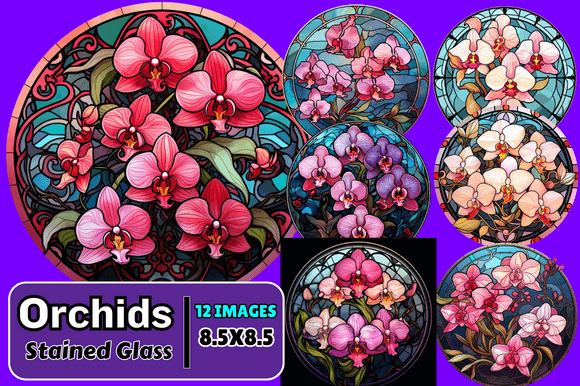
When you explore a collection like the Orchids Stained Glass bundle, you are often met with a promise of versatility. This particular set typically includes 12 HD images in PNG format, sized at 8.5" x 8.5". While these specifications might seem straightforward, their impact on your workflow is profound. A common misunderstanding among beginners is assuming that any image labeled "HD" will work equally well across all mediums. In reality, the difference between a standard web graphic and a true high-quality printable file can make or break a physical product.
For instance, if you intend to use these designs for acrylic tumbler wrapping or large-scale wall art, resolution is non-negotiable. Low-resolution files may look acceptable on a computer screen but become pixelated and blurry when printed on physical materials. The Orchids Stained Glass collection is designed to mitigate this risk by providing files that maintain clarity even when scaled. Ignoring this detail often leads to wasted materials, especially when using expensive substrates like ceramic mugs or premium cardstock for greeting cards. Always verify the DPI (dots per inch) and dimensions before committing to a print run.
Avoiding Format Confusion: PNG vs. SVG vs. PDF
One of the most frequent errors creators make is selecting the wrong file format for their specific tool or project. The Orchids Stained Glass pack usually offers PNGs, which are perfect for printing, sublimation, and digital layering because they support transparent backgrounds. However, many crafters mistakenly try to use PNGs for cutting machines like Cricut or Silhouette without realizing the limitations. While you can trace a PNG, a native SVG file provides clean vector paths that ensure smooth cuts every time.
If your goal is to create stickers, stationery, or intricate paper crafts, relying solely on raster images (PNG) when vector options are available can result in jagged edges or loss of detail during the cutting process. Conversely, if you are focusing on sublimation for straight tumblers or mugs, a high-quality PNG is actually superior because it preserves the complex color gradients and texture inherent in stained glass artwork. Before starting, ask yourself: "Am I printing ink onto a surface, or am I cutting a shape out of a material?" This simple question determines whether you should prioritize the PNG files for their color depth or seek out SVG alternatives for precision cutting.
The Trap of Ignoring Background Transparency
Another overlooked detail involves the background of your digital assets. True utility in digital design comes from transparency. When working with Stained Glass Clipart or Stained Glass Elements, the ability to layer these designs over different colors or patterns is essential. A common mistake is downloading files that have a white or colored box behind the orchid design, forcing the user to spend hours manually removing the background in editing software.
This not only wastes time but can also degrade the quality of the delicate lines in the stained glass pattern. High-quality bundles, like the one featuring Orchids Stained Glass, provide files with pre-removed backgrounds. This allows for seamless integration into gift wrapping papers, planner covers, or invitation suites. If you find yourself struggling with halos or leftover pixels around your design, it is likely a sign that the source file was not a true transparent PNG. Investing in properly prepared assets ensures your final presentation looks professional and polished.
Maximizing Versatility Across Different Projects
The beauty of a well-curated Stained Glass Bundle lies in its adaptability. Yet, many users limit themselves by using the same approach for every project. For example, applying a design meant for a flat greeting card directly onto a curved straight tumbler without adjusting the layout can lead to distortion. The 8.5" x 8.5" dimension is excellent for square formats, but wrapping a cylindrical object requires careful consideration of how the image stretches.
To avoid this, consider the end use before you begin. If you are creating 3d Tumbler Wrap Png designs, visualize how the orchid pattern will flow around the curve. You might need to duplicate elements or adjust the positioning so the focal point remains visible from the front. Similarly, when using these graphics for scrapbook decorations or stickers, think about scale. A design that looks stunning as wall art might overwhelm a small planner sticker if not resized appropriately. Taking a moment to mock up your design digitally before printing can save significant resources and improve the aesthetic balance of your creations.
Ensuring Color Accuracy and Print Quality
Color management is another area where enthusiasts often face disappointment. Screens display colors in RGB (light), while printers use CMYK (ink). The vibrant, glowing look of Stained Glass Artwork on your monitor may appear duller when printed if not managed correctly. This discrepancy is particularly noticeable in stained glass designs, which rely on rich, saturated hues to mimic the effect of light passing through glass.
To counteract this, always perform a test print on the actual material you plan to use. Paper absorbs ink differently than sublimation coating on mugs or acrylic. If your Orchids Stained Glass prints look muddy, check your printer settings and ensure you are using the correct color profile for your medium. Additionally, the quality of the substrate matters; cheap, thin paper can bleed, ruining the fine details of the Stained Glass Texture. Opting for high-quality cardstock or coated blanks ensures the colorful design pops exactly as intended.
Making an Informed Decision Before You Download
Before adding any digital asset to your library, take a critical look at what is included. A comprehensive pack should offer more than just a single image; it should provide a range of orientations and variations to suit different needs. When evaluating a Stained Glass Digital collection, check for consistency in style and quality. Are all 12 images in the Orchids Stained Glass set rendered with the same level of detail? Do they share a cohesive color palette that works well together?
Furthermore, consider the licensing terms. If you are an entrepreneur planning to sell items featuring these designs, such as sublimation mugs or custom invitations, ensure the license permits commercial use. Misunderstanding licensing agreements can lead to legal issues down the road. Reliable creators clearly outline what you can and cannot do with their Stained Graphics and Illustrations. By doing your due diligence, you protect your business and ensure peace of mind as you grow your creative endeavors.
In conclusion, leveraging Orchids Stained Glass and similar digital resources can elevate your craft projects from amateur to professional. By paying attention to resolution, choosing the right file formats, respecting transparency, and understanding color dynamics, you avoid the common traps that hinder creativity. Whether you are designing for personal joy or commercial success, these practical steps ensure that your final output honors the intricate beauty of the stained glass aesthetic. Take the time to prepare, test, and refine your approach, and your results will reflect the care and expertise you put into every piece.